
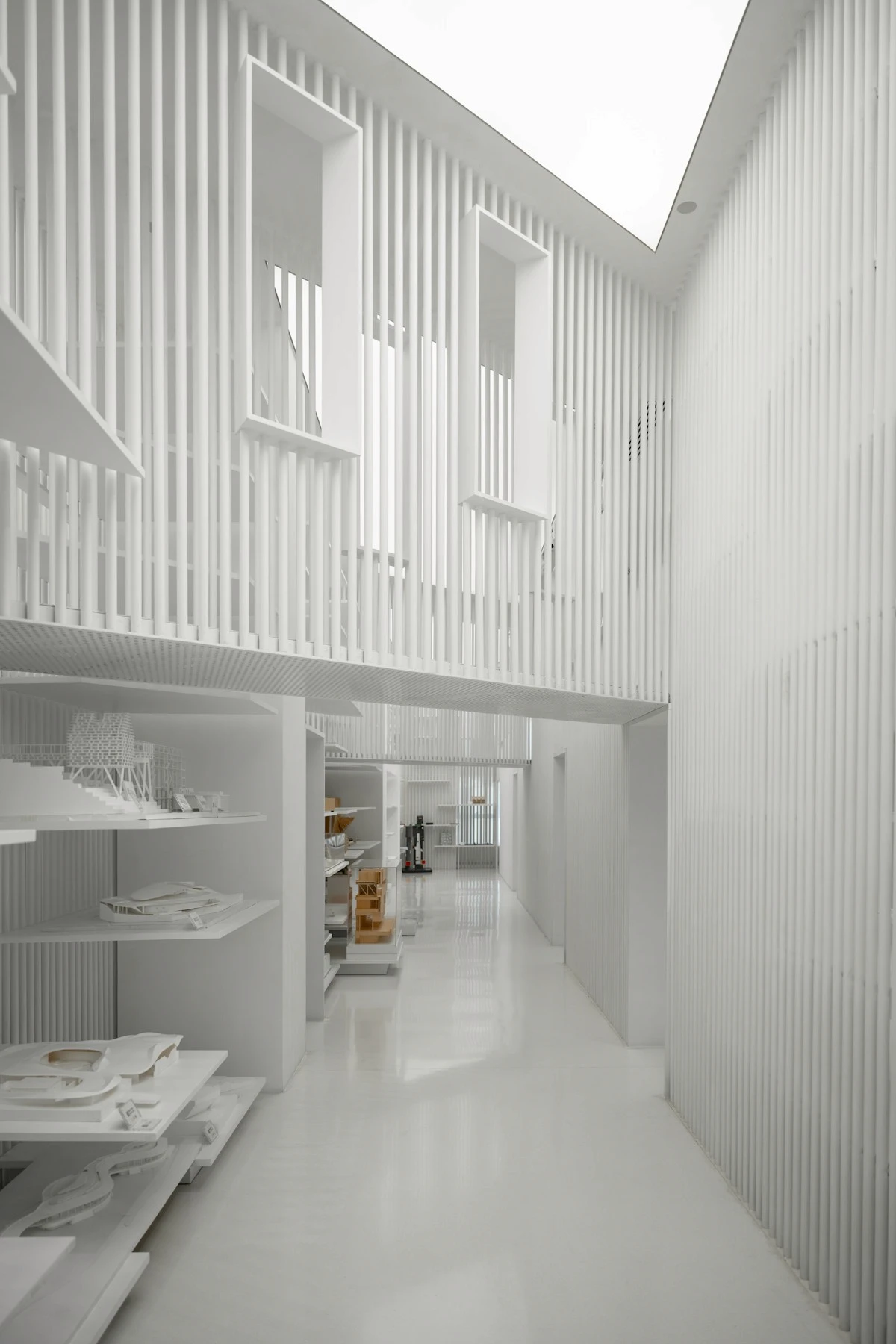
Small interiors are not defined by what they lack. With careful planning, compact rooms can feel open, comfortable, and surprisingly generous. The key is to make every decision serve more than one purpose.
Build into the architecture
Custom joinery can turn unused corners, awkward walls, and circulation zones into valuable storage. Integrated cabinetry also creates visual calm by reducing the number of separate objects competing for attention.
Use one continuous material language
Repeating timber, stone, or flooring across connected areas can make a compact home feel visually larger. A restrained palette creates continuity and allows the eye to move naturally through the space.
Choose furniture with flexibility
Pieces that can move, fold, extend, or serve multiple functions help a room adapt throughout the day. The goal is not to fill every available area, but to create enough space for living comfortably.